
Apr 24, 2026
Model Medicines to Present at SERVC 2026: MDL-001, a Universal Direct-Acting Antiviral for Respiratory and Hepatic Viral Infections
Oral presentation highlights first-in-class Thumb-1 polymerase inhibitor with broad-spectrum single-agent efficacy against influenza, RSV, SARS-CoV-2, HCV, HBV, and HDV
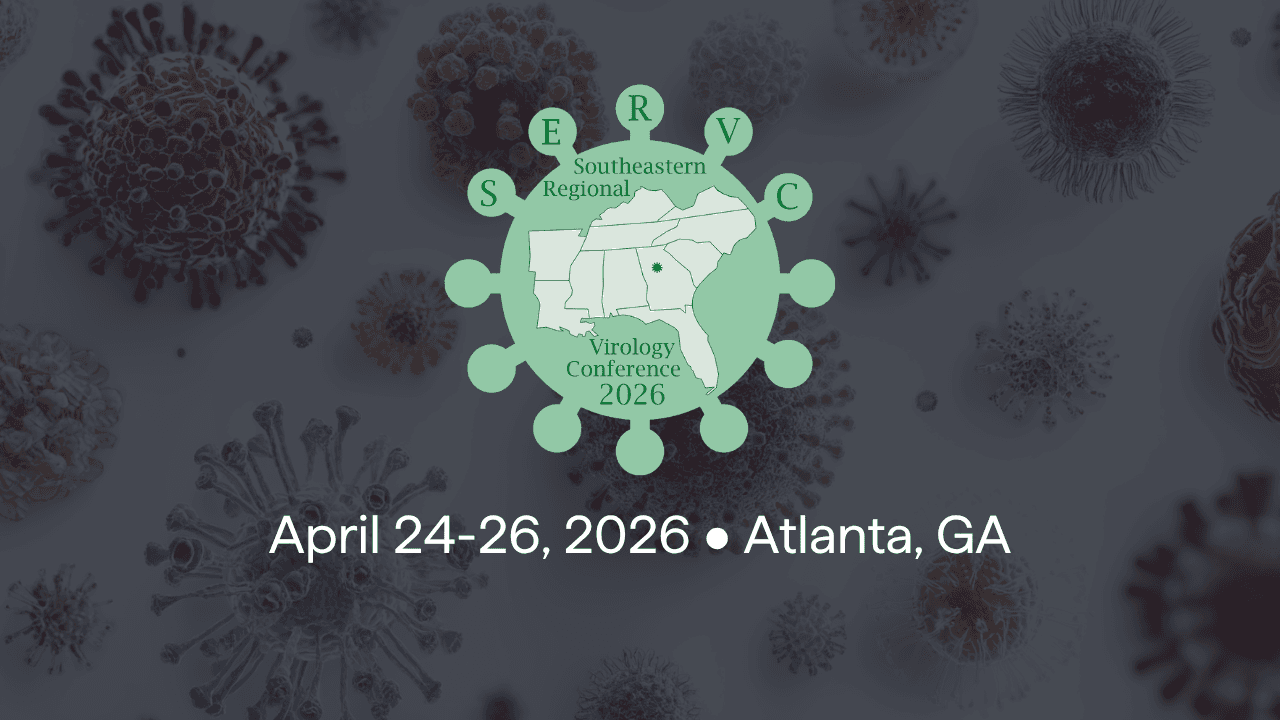
SAN DIEGO — Model Medicines, an AI-first biotechnology company developing first-in-class therapeutics against multi-indication biological choke points, today announced that it will present new preclinical data at the 18th Southeastern Regional Virology Conference (SERVC 2026), to be held April 24–26, 2026, at the Emory Hotel & Conference Center in Atlanta, GA. The oral presentation will be delivered by Virgil Woods, PhD, Senior Scientist at Model Medicines. The data advance MDL-001 toward two first-in-class therapeutic goals: a universal direct-acting antiviral for influenza-like illness (influenza, RSV, and coronaviruses) and a universal direct-acting antiviral for chronic hepatitis (hepatitis C, hepatitis B, and hepatitis D).
SERVC 2026 Oral Presentation
Presenter: Virgil Woods, PhD, Senior Scientist, Model Medicines
Title: MDL-001, an oral direct-acting Thumb-1 polymerase inhibitor, demonstrates broad-spectrum activity against influenza viruses, respiratory syncytial virus, and SARS-CoV-2 with oral proof-of-concept in mice
Authors: Virgil Woods*, Tyler Umansky*, Sean M Russell, Asha Z Goodman, Michael Bobardt, Briana L McGovern, Romel Rosales, M Luis Rodriguez, Harm van Bakel, Emilia Mia Sordillo, Viviana Simon, Adolfo García-Sastre, Kris M White, William F Brubaker, Philippe Gallay, Davey Smith, Daniel Haders
*These authors contributed equally.
Each winter, clinicians face a recurring tripledemic of influenza, RSV, and SARS-CoV-2. These viral respiratory illnesses (VRIs) impose a massive global disease burden, with hundreds of millions of infections and hundreds of thousands of deaths annually. In a non-pandemic year in the U.S., adults experience two to six VRIs and children approximately six to eight, with economic costs exceeding $100 billion. There are currently no single-agent antivirals approved to treat this annual convergence of the tripledemic respiratory viruses.
Chronic viral hepatitis is a health crisis of enormous proportions. An estimated 5–15 million people worldwide have both HBV and HCV infections., Most will never be diagnosed. Only 13% of HBV infections and 36% of HCV infections are diagnosed globally. Fewer than 1% of co-infected patients know their status. Current treatments for chronic hepatitis C possess a critical and potentially fatal vulnerability. Every FDA-approved HCV direct-acting antiviral (DAA) carries a black box warning for the risk of hepatitis B virus (HBV) reactivation in patients with current or prior HBV infection. This FDA-mandated warning, added in 2016, applies to all DAA regimens without interferon, such as Epclusa, Harvoni, Mavyret, and others. HBV reactivation in HCV co-infected patients can lead to fulminant hepatitis, liver failure, or even death.
Together, these gaps point to a persistent and largely unaddressed need: a single agent with broad-spectrum, direct-acting antiviral activity.
MDL-001 was discovered to meet that need. Demonstrated activity across both acute respiratory and chronic hepatic viral infections, combined with oral bioavailability, favorable pharmacokinetics, and demonstrated safety, positions the compound as a potential first-in-class therapy that could meaningfully improve multiple treatment paradigms.
“For decades, the field treated a broad-spectrum, non-nucleoside DAA as an impossibility,” said Daniel Haders, PhD, Founder and CEO of Model Medicines. “The prevailing view was that allosteric pockets on viral polymerases drift too quickly to support cross-family targeting. Our work shows that the RdRp Thumb-1 pocket is, in fact, conserved across viral families, and that it can be drugged. We are looking forward to presenting the data to the SERVC community and to the discussion that follows.”
The Southeastern Regional Virology Conference has been held every two years since 1990, and is one of the premier virology meetings in the United States. SERVC 2026 was organized by Mehul Suthar (Emory), Helen Lazear (UNC), Megan Stanifer (Florida), and Steeve Boulant (Florida), and convenes virologists across emerging viruses, immunity, DNA virus replication and latency, respiratory viruses (influenza, SARS, and zoonoses), retroviruses, flaviviruses, intestinal viruses, vaccines, and diagnostics. The 2026 program features keynote speaker Ileana Cristea (Princeton) and plenary speakers from the University of Georgia, University of Kentucky, UAB, LSU, Vanderbilt, and University of Florida. Program details are available at https://tarheels.live/servc/.
About the Target: RdRp Thumb-1, A Conserved and Druggable Allosteric Target
Conventional scientific wisdom holds that allosteric sites on viral polymerases diverge too rapidly to enable broad-spectrum direct-acting antiviral (DAA) development.
Model Medicines overturned this assumption by demonstrating the structural conservation of the RNA-dependent RNA polymerase (RdRp) Thumb-1 allosteric pocket across viral families. The Thumb-1 site governs an essential mechanism for viral replication. The Thumb-1 pocket interacts with the viral Λ1-loop to control an indispensable conformational change required for polymerase initiation. Viruses cannot abandon this mechanism without sacrificing their replicative fitness. This target discovery is the biological foundation for the Model Medicines’ Virology Program.
About MDL-001: Discovery and Preclinical Profile
Model Medicines utilized its AI-driven GALILEO™ platform to discover novel broad-spectrum inhibitor chemistry for this target within a multi-scaffold Markush structure. The research team trained GALILEO™ on a proprietary dataset spanning multiple viral families. This training enabled the model to learn the structural and chemical features required for broad-spectrum Thumb-1 inhibition.
A library of potent inhibitors has been discovered, reduced to practice and validated. Specifically, MDL-001 is the first DAA shown to be potent against multiple viral families in vitro: Orthomyxoviridae, Pneumoviridae, Coronaviridae, Flaviviridae, Kolmioviridae, and Hepadnaviridae. MDL-001 has demonstrated multi-log antiviral efficacy against influenza, SARS-CoV-2, HCV and HBV in animal models. Furthermore, in vivo results demonstrate superiority or equivalence to multiple standards of care, including sofosbuvir, oseltamivir, remdesivir, and nirmatrelvir.
Model Medicines’ virology program, the discovery of the RdRp Thumb-1 site, and MDL-001 preclinical proof-of-concept data have been peer-reviewed, accepted and presented at IDWeek 2025, AASLD 2025, HepDART 2025, CROI 2026, and ESCMID Global 2026,. The company will present additional data at SERVC 2026. The full preclinical data readout can be found here. Model Medicines plans to file an Investigational New Drug (IND) application with the FDA for MDL-001 in late 2026 and anticipates commencing clinical trials in 2027.
Model Medicines
Model Medicines is an AI-first biotechnology company engineering first-in-class small molecules that target the biological linchpins underlying disease. The company’s research spans infectious disease, oncology, and inflammation, with programs designed around conserved molecular choke points that drive multiple pathologies. Model Medicines has discovered a direct-acting, non-nucleoside, broad-spectrum antiviral (MDL-001) and a potent, selective and novel BRD4 inhibitor (MDL-4102). Its work demonstrates how large-scale computation can uncover entirely new classes of drugs once thought unreachable. Model Medicines is advancing a new generation of therapeutics that redefine what is possible in modern drug discovery. Learn more at www.modelmedicines.com.
Media Contact
Patrick O’Neill
Head of Partnerships & Investor Relations
media@modelmedicines.com
www.modelmedicines.com
Details
Date
Category
Events
Reading
2 Mins
Author

Patrick ONeill
Head of Partnerships & Investor Relations
Related News