
the transcriptional choke point
Bromodomain-Containing Protein 4
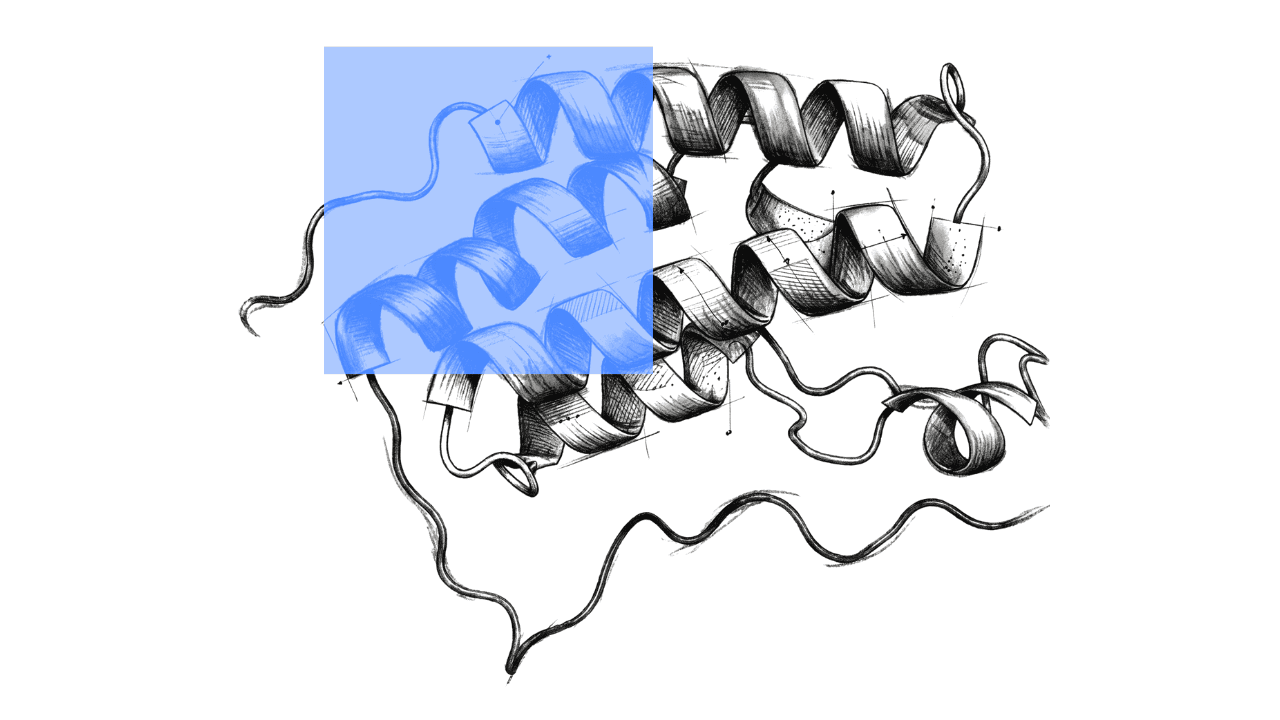
BRD4 sits at the convergence of oncology, fibrosis, inflammation, and cardiovascular disease. For two decades, pan-BET chemistry could not engage it without engaging BRD2 and BRD3, and collapsing the therapeutic window.
Model Medicines aims to solve this with MDL-4102.
Overview of BRD4
BRD4 (Bromodomain-Containing Protein 4) is a member of the BET (Bromodomain and Extra-Terminal domain) family, alongside BRD2, BRD3, and BRDT. BRD4 is the family member most consistently identified as the master regulator of disease-driving transcription.
BRD4 controls the expression of MYC and MYC family members, fibrotic transcription factors, and a wide class of inflammatory cytokines. Its substrate is super-enhancer biology, the dense, high-occupancy regulatory regions that disproportionately drive cell identity in cancer, immune disease, and tissue remodeling. When BRD4 is inhibited, the transcriptional programs that depend on it collapse.
BRD4 biology spans:
Oncology
NUT carcinoma (NMC), AML, ALL, multiple myeloma, hepatoblastoma, HGSOC, TNBC, and BRD4-driven hematologic malignancies.
Fibrosis
Idiopathic pulmonary fibrosis (IPF), liver fibrosis, renal fibrosis, scleroderma.
Immunology & Inflammation
Graft-versus-host disease (GVHD) and related autoimmune indications.
Cardiovascular Disease
Pulmonary arterial hypertension (PAH), cardiac hypertrophy.
Mechanism of Action
BRD4 contains two tandem bromodomains, BD1 and BD2. They bind acetylated histone H3 and H4 tails. Acetylation marks recruit BRD4 to active chromatin, where its extra-terminal domain scaffolds the positive transcription elongation factor b complex (P-TEFb / CDK9). P-TEFb phosphorylates the C-terminal domain of paused RNA polymerase II, releasing it into productive elongation. BRD4-dependent genes are transcribed; without BRD4, they are not.
A small molecule that engages BRD4's BD1 and BD2 displaces it from these enhancers, dismantling the transcriptional programs that maintain the disease state.
The mechanism is well validated. Chemistry has been the limiting factor.
Historical Difficulties
The clinical history of BET inhibition is a graveyard of pan-BET programs stopped by an unforced chemistry problem. Every clinical BET inhibitor to date engages BRD2 and BRD3 alongside BRD4. Therapeutic indices reported across the class are narrow enough that dose-limiting hematologic toxicity has stalled trials before efficacy can be demonstrated at meaningful exposures.
The clinical signal in pan-BET trials is real. The dose that produces it is incompatible with chronic dosing.
A selective BRD4 inhibitor with a real hematologic window is needed.
Overcoming the Difficulty with AI
Selectivity required new chemistry. Model Medicines solved the problem by abandoning the scaffolds the field had converged on.
In 2025, Model Medicines announced at the Google Cloud Cancer AI Symposium, that it executed a 325-billion-molecule ultra-large virtual screen against BRD4 in a single 24-hour period. This record-breaking feat resulted in the program’s lead asset, MDL-4102.
Lead Asset
A highly potent and selective BRD4 inhibitor with no measurable activity against BRD2 or BRD3. The program was optimized for BRD4 selectivity, transcriptional impact, and drug-like properties simultaneously. MDL-4102 is designed to overcome the dose-limiting hematologic toxicities that hindered prior pan-BET inhibitors, positioning it as a next-generation transcriptional therapy with the potential for durable efficacy across BRD4-driven malignancies. Beyond oncology, BRD4 biology extends into fibrosis, cardiovascular disease, and autoimmune disorders, expanding the potential addressable market to more than $60 billion annually across these therapeutic areas. By enabling selective transcriptional modulation with improved tolerability, MDL-4102 is positioned as a differentiated, next-generation approach to targeting core disease-driving gene expression programs. The program is currently in IND-enabling studies. IND submission is targeted for 2027.