
Lead Asset
MDL-4102
A Next-Generation Potent and Selective BRD4 Inhibitor

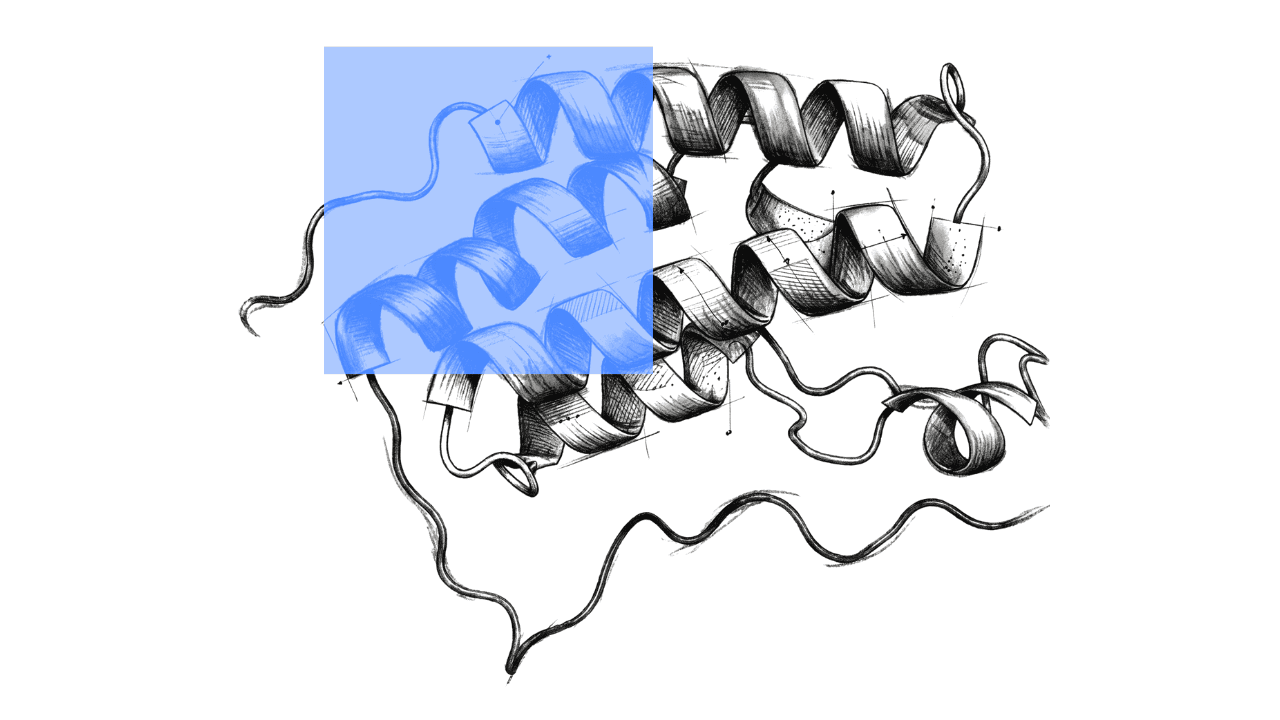






BRD4 is a master regulator of transcriptional control across oncology, fibrosis, inflammation, and cardiovascular disease. MDL-4102 is a first-in-class, selective BRD4 inhibitor designed to overcome the dose-limiting hematologic toxicity that hindered all prior pan-BET programs, positioning it as a next-generation transcriptional therapy.
RECORD-SCALE AI SCREENING
GALILEO™ Delivers MDL-4102 at Hundred-Billion Scale
GALILEO™ achieved 325-billion molecule throughput on Google Cloud, powering the discovery of MDL-4102, a first-in-class selective BRD4 inhibitor with no observable BRD2 or BRD3 activity.
breakthrough milestone
The BRD4 outcome highlights GALILEO™ as an engine for moving from large-scale screening to targeted discovery.

Daniel Haders II, Ph.D
Founder, CEO
Overview of BRD4
MDL-4102 is a first-in-class, oral, highly potent, and selective BRD4 BD1/BD2 inhibitor. It was identified through the GALILEO™ platform after a record-setting 325-billion-compound ultra-large virtual screen, executed in a single 24-hour period in 2025 in partnership with Google Cloud.
MDL-4102 is being developed across multi-indication disease areas where BRD4 is a master regulator:
Oncology
Including NUT midline carcinoma (NMC), AML, multiple myeloma, HGSOC, and TNBC.
Fibrosis
Including idiopathic pulmonary fibrosis (IPF), liver fibrosis, renal fibrosis, and systemic sclerosis (scleroderma).
Immunology & Inflammation (I&I)
Including steroid-refractory acute GVHD and related autoimmune indications.
Cardiovascular Disease (CVD)
Including pulmonary arterial hypertension (PAH) and cardiac hypertrophy.
vs Standard of Care
The biological rationale for targeting BRD4 is well established, but all clinical-stage BET inhibitors to date exhibit pan-BET activity (inhibiting BRD2 and BRD3 alongside BRD4). This lack of selectivity causes dose-limiting thrombocytopenia (platelet reduction) and other toxicities that prevent achieving sustained BRD4 occupancy at therapeutic doses.
MDL-4102 overcomes this difficulty with AI-discovered chemical novelty, occupying an entirely distinct chemical series from the pan-BET scaffold class (based on ECFP4 Tanimoto). This structural divergence is the molecular basis for its selective profile.
MDL-4102 demonstrates a strong BRD4/BRD3 selectivity index; in contrast with first-generation pan-BET inhibitors, which show poor selectivity windows against BRD2 and BRD3.
Preclinical Proof of Concept: Selective Inhibition & Safety Window
MDL-4102's selectivity for BRD4 over BRD2/BRD3 is designed to decouple anti-tumor efficacy from dose-limiting thrombocytopenia.
Selectivity
MDL-4102 has no measurable activity against BRD2 or BRD3 in cell-free assays.
Mitigating Thrombocytopenia
The compound mitigates dose-limiting thrombocytopenia.
Therapeutic Index
It demonstrates a favorable Thrombocytopenia Therapeutic Index in the disease model, showing the widest Therapeutic Index among BET comparators.
Preclinical Proof of Concept: Therapeutic Efficacy
MDL-4102 has established in vitro proof of concept across major therapeutic areas:
Oncology
The long-term goal is to develop MDL-4102 as the first selective BRD4 inhibitor for super-enhancer-driven cancers. It will be evaluated in cellular and in vivo models of NMC, AML, and multiple myeloma, with in vivo endpoints including xenograft tumor growth inhibition.
Fibrosis
Demonstrated potent, BRD4-mediated anti-fibrotic activity in a human primary fibrosis disease model, reducing αSMA fiber area with an IC50 = 0.116 µM.
Pharmacokinetics
The program was optimized for transcriptional impact and drug-like properties simultaneously. MDL-4102 exhibits exceptional chemical novelty from a structurally novel series. IND-enabling studies are underway.
Mechanism of Action
MDL-4102 is a direct-acting small molecule inhibitor targeting the two tandem bromodomains (BD1 and BD2) of BRD4.
Targeting BRD4
BRD4 is recruited to super-enhancers by binding acetylated histone H3 and H4 tails.
The Choke Point
BRD4 scaffolds the positive transcription elongation factor b complex (P-TEFb / CDK9) which, in turn, releases paused RNA polymerase II into productive elongation. This drives the expression of critical oncogenes (like MYC and BCL2) and transcription factors.
Inhibition
MDL-4102 engages BRD4's BD1 and BD2, displacing it from these enhancers and dismantling the disease-driving transcriptional programs.
Safety Data
The program's design is specifically focused on safety to allow for chronic dosing. MDL-4102's host-sparing selectivity profile is intended to preserve platelet homeostasis and circumvent the dose-limiting toxicity of prior pan-BET inhibitors.
Timeline for IND and Clinical Trials
The program is currently in IND-enabling studies.
IND Submission Target
2027.
Lead Indication
The lead indication for IND submission has not yet been announced.